

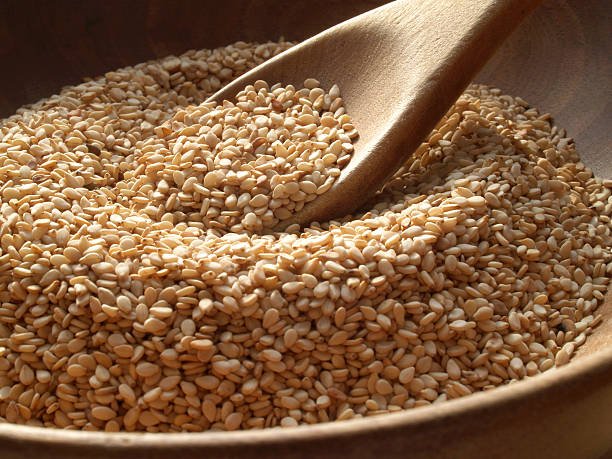
Adding Sesame Seeds (Til) completes your collection with a beautiful, oily crunch. Unlike the “spice-cabinet” intensity of Cloves or Mustard, sesame seeds are more of a “culinary builder”—they provide texture, fat, and a toasted nuttiness that rounds out the sharper spices.
If you have 50g of Sesame Seeds, that’s about 5 to 6 tablespoons.
🌿 The Anatomy & Flavor Profile
Sesame seeds (Sesamum indicum) are tiny, flat, pear-shaped seeds. Depending on whether they are white (hulled), tan (unhulled), or black, their flavor changes slightly.
-
Appearance: Tiny and teardrop-shaped.
-
White/Tan: Mild and nutty.
-
Black: Earthier and slightly more bitter.
-
-
The Scent: Very faint when raw, but once toasted, they smell like freshly baked bread or peanut butter.
-
The Taste: Creamy and rich. Because they are roughly 50% oil, they have a “milky” quality when ground.
🍳 Culinary Roles for Sesame Seeds
Sesame seeds are the perfect bridge between your Coconut and your heavier spices like Cumin.
-
The Thickener: In many regional Indian cuisines (like Maharashtrian or Hyderabadi), ground sesame seeds are mixed with Coriander and Coconut to create a thick, rich gravy for curries like Ennagayi or Bagara Baingan.
-
The “Crunch” Factor: Sprinkled on top of breads or stir-fries for texture.
-
Za’atar Style: If you mix your Sesame Seeds with some salt and dried herbs, you’re halfway to a Middle Eastern spice blend.
-
The Toasted Finish: Dry-roasting your 50g will deepen the color and intensify the flavor. Just be careful—they go from “golden” to “burnt” in seconds!
Reviews
There are no reviews yet.