

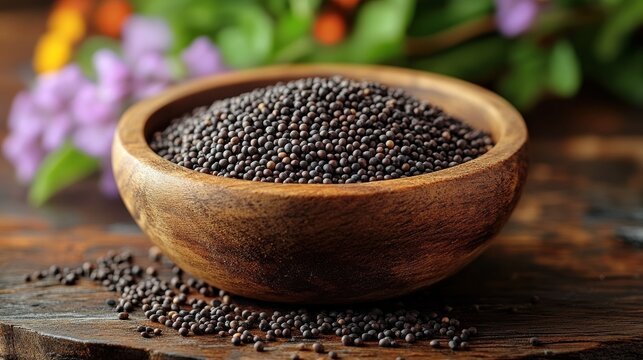
The collection is almost complete! Adding Mustard Seeds (Rai or Sarson) brings the pop and the heat. If you have 50g of Mustard Seeds, that’s about 3 to 4 tablespoons. Unlike your “warm” spices like Cinnamon or Cumin, mustard is all about a sharp, nasal-clearing pungency.
🌿 The Anatomy & Flavor Profile
Mustard seeds come in three main varieties: Yellow (White), Brown, and Black. Given your spice list so far, you likely have the Brown or Black variety common in Indian and fusion cooking.
-
Appearance: Tiny, hard, perfectly round spheres. Black seeds are the smallest and most pungent; yellow are the largest and mildest.
-
The Scent: Almost non-existent when raw and cold. The magic only happens when they are crushed or heated.
-
The Taste: Nutty and mild when toasted whole, but fiery and sharp when ground and mixed with water. This “heat” (caused by the enzyme myrosinase) is more like horseradish than chili—it hits the nose, not the throat.
🍳 Culinary Roles for Mustard Seeds
Mustard is the “alarm clock” of a dish—it wakes up all the other flavors.
-
The Sizzle (Tadka/Pop): In South Indian cooking, you heat oil until it’s shimmering, then drop in the seeds. Cover the pan! They will pop like tiny popcorn. Once they pop, their bitterness turns into a delicious nuttiness.
-
The Emulsifier: Ground mustard helps oil and water stay together, which is why it’s the secret to a perfect vinaigrette or a thick, creamy sauce using your 250g of Coconut.
-
Pickling Legend: Along with your Cloves and Coriander, whole mustard seeds are a preservative powerhouse. They add “crunch” and a sharp bite to pickled vegetables.
-
The “Fish Curry” Essential: In Bengali and Goan cuisine, mustard and Coconut are the ultimate duo for seafood.
Reviews
There are no reviews yet.